Frost on the Schedule: A Hudson Homeowner's Cold-Snap Drain Checklist
The forecast has that look to it. Nights dropping into the twenties, a day or two that never claws its way out of the thirties, and the first hard freeze sitting there in the ten-day like a relative who didn't call ahead. Around Hudson, that's the week the phone starts ringing differently — fewer "my sink is slow" calls, more "there's water where water shouldn't be" calls.
The good news is that most cold-weather drain and pipe trouble is almost embarrassingly preventable. You don't need a plumber for the prevention half. You need thirty minutes, a flashlight, and the willingness to walk around your own house in a jacket. Here's the list we'd run on our own places before the mercury falls.
Quick reality check: your drain isn't the thing that freezes
When people say a drain froze, what usually froze was something outside the heated envelope of the house — a downspout, a yard drain, a hose bib, a sump discharge line. Indoor drains sit in conditioned space and rarely ice up unless the heat's off or a pipe runs through an unheated crawl space, garage, or rim joist cavity.
So this checklist leans hard on the outside of the house, then finishes with the indoor spots that quietly cause the most expensive headaches.
1. Downspouts: the cheapest fix you'll make all fall
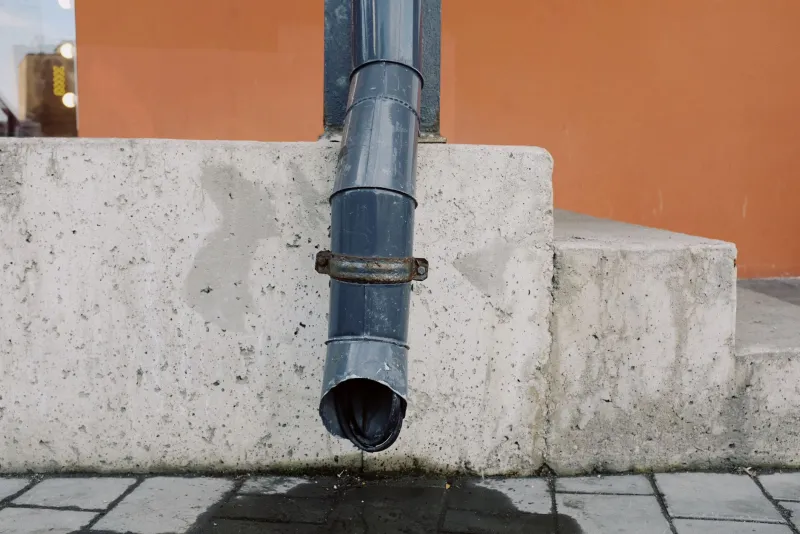
Walk the perimeter and look at where each downspout ends. If it dumps within a couple feet of the foundation, you're inviting water into the same block wall your basement floor drain is trying to protect. Add an elbow and a four- to six-foot extension, or a flexible splash block, and aim the discharge downhill and away.
While you're there, clear the leaves. A downspout packed with wet leaves plus a freeze equals a solid plug of ice, and the next rain has nowhere to go but over the side and into the window well.
2. Yard drains, area drains, and window wells
Lift the grate on any yard or patio drain and scoop out the debris. If the drain has a trap or a strainer basket, clean it. Check window wells for accumulated leaves and make sure the drain at the bottom is open — a window well that fills and freezes is a basement leak with a head start.
3. Hose bibs and exterior faucets
This one costs nothing and prevents some of the most spectacular repair bills of the year.
- Disconnect every garden hose. A hose left connected traps water in the faucet body, and that's what splits things.
- If you have a frost-free sillcock, shut off the interior valve if there is one, then open the outside handle to let the barrel drain.
- Blow out irrigation lines and drain the backflow assembly if you haven't already. Sprinkler blowouts book up fast this time of year.
- If your exterior faucet has no interior shutoff, a cheap foam cover is better than nothing, but know its limits.
4. The basement floor drain nobody thinks about
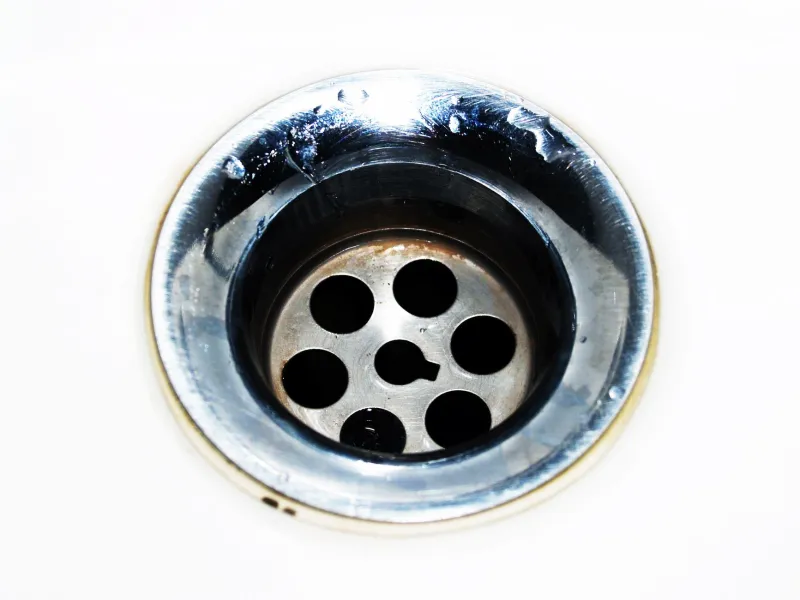
Here's a sneaky one. The trap in a floor drain that never sees water will evaporate over a dry fall, and once it's dry you get sewer gas drifting up into the basement. Then, if that trap has a shallow standing puddle in January, it can skin over with ice.
Pour a quart of water down every floor drain in the basement, laundry room, and mechanical room. If a drain is truly unused, top it with a splash of mineral oil or RV (not automotive) antifreeze to slow evaporation. Do it now, then again around the holidays when the house is full and the laundry runs nonstop.
5. Sump pump and its discharge line
The pump itself is fine in cold weather — it's the line outside that gets you. Test the pump by pouring a bucket of water into the pit and watching it kick on and shut off cleanly. Then go outside and confirm the discharge line slopes away and isn't buried under a pile of leaves or sitting in a low spot where it'll freeze solid. A frozen discharge line turns into a dead pump, and a dead pump turns into a wet basement during the first January thaw.
6. Gutters and the roof line
Full gutters cause ice dams, and ice dams send meltwater down inside the wall instead of down the downspout. If you're not comfortable on a ladder, this is a reasonable thing to hire out — and it's far cheaper in November than in February.
7. The indoor scan that takes two minutes
Open the cabinet under each sink and look at the wall penetration for daylight or drafts. Cold air hitting a supply line is how pipes freeze in houses that are otherwise warm. Check the crawl space hatch, the garage wall, and any pipe run along an exterior wall. Foam, fiberglass, or a cheap pipe sleeve is fine. Also confirm your heat is set to stay above about 55 degrees even when you're away.
Fix now, or call now?
Most of the list above is DIY. The part worth handing off is anything already misbehaving. If a drain is draining slower than it did in September, if you're getting a whiff of sewer gas even after priming the traps, if the sump pump short-cycles, or if you've never had the main line looked at in an older home, book a drain check before the ground freezes. Diagnosing a line is easier and cheaper while everything is still soft.
One last note, since the calendar is what it is
Thanksgiving is two weeks out. That means a house full of people, a dishwasher running three times a day, a washing machine handling guest linens, and a kitchen sink doing things it doesn't do the other fifty weeks of the year. Getting the drains squared away now is really two jobs in one: freeze prep and hosting prep.
If you'd rather have someone else crawl around with a flashlight, that's what we're here for. Hudson Drain Cleaning handles drain checks, main line inspections, and slow-drain diagnostics throughout the Hudson area — and November appointments fill up quickly once the first cold snap hits the forecast.